
A tale of two courts
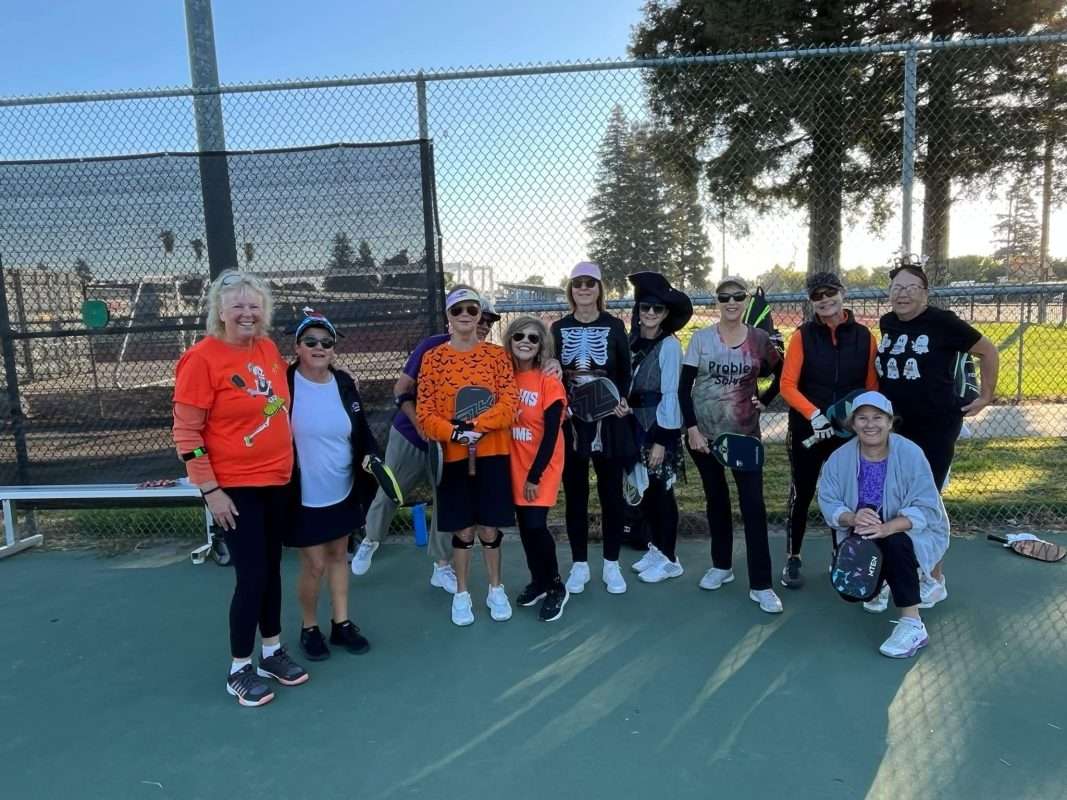
I play pickleball three to four days a week, at two different places, and lately I’ve been carrying a little knot in my stomach about it. It’s about my pickleball friendships, and how to hold onto them when you love more than one pickleball group.
Once a week, I go back to the courts where I started. It’s open play. You put your paddle in the rack and take whatever game comes up. One rally you’re dinking with a brand-new player who’s still figuring out the kitchen line. The next, you’re dodging a banger who treats every ball like it owes him money. You never quite know what you’ll get. But those are the courts where I learned to love this game, and the women there are the friends who taught me how to keep score.
Then, I found another court where I belong.
Twice a week, I play somewhere new. It’s a set group of about 20 players, all around the same level. Honestly? I’m one of the weaker players there. And playing up has done more for my game in a few months than the previous year did. The rallies are longer. The decisions are faster. I come home tired in the best way. And the people are warm, welcoming, and a lot of fun.
Here’s the part that’s hard to say out loud. I feel like some of my old friends look at my new group a little sideways. And I’ve noticed I’m not getting the same invitations I used to: the birthday lunch, the after-play margaritas, the group text that suddenly goes quiet. I don’t think my friends are consciously leaving me out. I think it’s a matter of not being around when plans are made.
I’ve been playing for five years now. And I’ve learned this isn’t just my story. It’s one of the most common, least talked-about parts of pickleball.
Why changing pickleball groups is so hard
In pickleball, deciding where and with whom you play is never just about the game. It touches your friendships too, and nobody warns you about that.
Think about why most of us fell for this game. For many women I play with, the court is where real friendships formed, sometimes for the first time in years. It’s where we found people who share our values, laugh at our mishits, and notice when we don’t show up. Some of us came looking for exercise and stayed because, as one player put it, we didn’t realize how lonely we’d been.
And people add a new place to play for all kinds of reasons. Sometimes it’s about finding a different level of play. But just as often it’s the size of the group, how many games you can get in a session, or the chance to see different play styles. One group might be all soft, patient dinking. Another might run fast-paced drills or mix up partners every game. Each one stretches you in a different way.
That doesn’t mean you stopped growing where you were. It just means variety is good for your game, the same way cross-training is good for your body.
But when you start spending time somewhere new, you’re not just changing who you rally with. You’re shifting where you belong. That’s a big deal.
And it’s stressful from every side:
-
- The one who’s moving feels guilty, like she’s abandoning her people or getting “too good” for them.
-
- The ones staying put can feel left behind, judged, or quietly measured, even when nobody intended that.
-
- Everyone worries about the same thing underneath: Am I still wanted here?
That last fear runs deep. Many of us are already our own harshest critics on the court. We worry about letting our partner down, being the reason the side loses, or not being invited back. A friend switching groups can poke right at that sore spot, no matter which side of the switch you’re on.
None of this makes anyone a bad person. It’s an unintended consequence of growing, or choosing not to, in a game where your friends and your level are tangled together.
Athletes, non-athletes, and finding your kind of play
Pickleball is different from most sports in one beautiful way: it welcomes everyone. Former tennis players and college athletes share the court with women who never played a team sport in their lives. That mix is a big part of what makes this game so special.
For those of us who are the non-athletes, though, pickleball can be our first real taste of athletic culture. And that culture comes with its own ideas about competition. Some players keep score in their heads long after the game ends. Some want every point to count. Some treat a Tuesday morning round robin like a tournament final. If you’ve never been around that before, it can catch you off guard.
Then something interesting happens. Some of us discover a competitive streak we never knew we had. We start caring about the score, wanting to win, chasing that next level. It’s surprising, and honestly a little thrilling.
Others discover the opposite. We realize we’re not wired for intense competition at all, and that style of play just isn’t fun for us. We’d rather have a long, friendly rally and a good laugh than a hard-fought win.
Neither is better. But these differences shape where we feel at home. Competitive players tend to gravitate toward groups that push them. Social players look for groups where the joy of the game comes first. Many of us want a bit of both, depending on the day.
So when friends end up playing in different places, it isn’t always about skill. Sometimes it’s simply that we’ve each learned what kind of player we are, and gone looking for the court that fits.
If you’re the one moving on
Let me say this first, because I needed to hear it: wanting to grow is not a betrayal.
Many of us spent decades putting everyone else’s needs first. Choosing a group because it’s good for your game might be one of the first times in a long while you’ve claimed something just for yourself. That’s not selfish. That’s you, still becoming.
Here’s what has helped me hold onto both:
-
- Be honest about the why. Not “I’m better now,” but “I’m working on my game and I need the challenge of playing against different kinds of players.” Frame it as a goal, not a ranking. Most friends can cheer for a goal.
-
- Don’t disappear. If you can, keep a regular day with your original crew, and protect it. Consistency tells people they still matter more than any explanation could.
-
- Show up off the court too. Pickleball friendships aren’t only built in rallies. Go to the lunch. Text the group. Ask about the grandkids. If invitations have slowed, extend one yourself.
-
- Play the game they’re playing. When you’re back at open play, relish making new friends and playing where you first belonged. Enjoy the rally. Help a newer player feel welcome, the way someone once did for you.
-
- Watch your talk. It’s easy to gush about the “great games” at the new place. To a friend who’s feeling left behind, that can sound like “better than you.” Share the joy, skip the comparisons.
-
- Expect some grief, including your own. You may miss the old chaos more than you thought. That’s okay. Change can be right and still feel like a loss.
If you’re the one watching a friend go
Now let’s flip the court. Maybe you’re the one whose partner has started playing somewhere else. Maybe you’re happy with your game right where it is. That is a completely valid choice.
Not everyone wants to chase something different in their game. Some of us play for the laughter, the movement, the reset our brains get from an hour of full attention. Pickleball doesn’t owe anyone a rating bump to be worth playing.
Still, watching a friend move on can sting. A few things worth keeping in mind:
-
- Her choice isn’t a verdict on you. She’s chasing something for her own game. It almost never means she thinks less of you.
-
- Notice the story you’re telling yourself. “She thinks she’s too good for us” is a story. “She’s working on something and misses us too” might be the truer one.
-
- Keep the door open. Invite her to the social stuff, even if she’s on the court with you less. Friendships can outlast a schedule change, if someone keeps the invitations coming.
-
- Get curious, not cold. Ask what she’s working on. You might learn something for your own game, or simply make her feel seen.
And if part of you is wondering whether you secretly would like a different pickleball experience? That’s worth paying attention to. You’re allowed to want more from your game, at any age and any stage.
Loving both, and running out of hours
Here’s the twist nobody mentions: I genuinely enjoy both places.
I love the challenge of my new group, the long rallies and the way it pushes me. And I love the open-play chaos at my old courts too. The surprise matchups, the newer players I get to encourage, the friends who’ve known me since I couldn’t hit a third shot drop. Each place gives me something the other can’t.
The hard part isn’t choosing. It’s the calendar.
Most of us aren’t sitting around waiting to fill our days. We’re working, volunteering, caregiving for parents or grandkids, keeping a household running. Three days of pickleball already takes real juggling. Some weeks I want to add a fourth day at the old courts just to catch up with everyone, and then I remember my body, my family, and my to-do list have opinions too.
So I end up feeling stretched. Too little time with my old friends, and sometimes I feel guilty even for missing a session at the new group. If you’ve felt that pull, you’re not alone. Loving two places is a good problem. It’s still a problem.
What’s helped me:
-
- Pick a rhythm and protect it. A set day for each place means fewer week-by-week decisions and less guilt.
-
- Let some weeks be uneven. One week might lean toward the old courts, another toward the new group. Balance can happen over a month, not every week.
-
- Count connection, not just court time. A quick coffee or a phone call with an old friend can keep the bond strong on weeks you can’t make open play.
-
- Rest counts too. Skipping a session to recover isn’t letting anyone down. It’s how you keep playing for years.
How to keep your pickleball friendships and keep growing
You don’t have to choose between your people and your game. But you do have to be intentional. Here are a few things I’m trying, and a few I’ve seen work for others:
-
- Separate social from skill. Your challenge group is for growth. Your friends are for life. Plan a coffee, a walk, or a potluck that has nothing to do with paddles.
-
- Mix it up on purpose. Organize an occasional “bring a friend” day, or a casual round robin where both groups meet. Bridges get built when people actually meet.
-
- Use open play as practice. Every unpredictable game is a chance to work on control: placing the ball, resetting a banger’s drive, choosing smart over fast. Mixed levels are a skill test of their own.
-
- Talk about it. The awkwardness grows in silence. A simple “I miss you guys and I don’t want my schedule to change us” can melt months of quiet tension.
-
- Give it time. Groups shift and resettle. The friends who matter tend to find their way back to each other, especially when someone keeps reaching out.
You’re allowed to keep becoming
I still go back to my old courts every week. Some weeks it feels like home. Some weeks it feels a little awkward. I’m learning that both can be true.
What I keep coming back to is this: pickleball found most of us at a moment when life was shifting. It gave us something that’s ours: a place to feel capable, to be seen, and to keep growing. Growth means things change, sometimes including who we play with.
But the heart of this game was never the rating or the court. It’s the people. Whether you’re moving up, staying put, or somewhere in between, there’s room to honor your game and your friendships.
So play where you grow, feel joy and laugh. Love who you love. And keep the invitations coming, in both directions.
Set a regular rhythm for each place, let some weeks be uneven, and count off-court connection as time together too. Build in rest so you can keep playing for years.
I’d be remiss if I didn’t speak about the third pickleball community I love. It’s the tribe of players who cheer me, coach me and console me at betterpickleball.com.
Thanks CJ, for creating a space where I can muddle through my pickleball life knowing there is a place for me to belong.
Have you been through this, on either side? I’d love to hear how you handled it. Share your story in the comments.

I love you no matter where you play. Friends for life. What a great blog. I knew you were good but wow that was outstanding. This game brought us together and nothing will tear us apart unless you pickle me. Lol.
They really are the most important thing!
Love you too!
Well said!
Thanks Kat!
This is one of the best pickleball articles I’ve read in quite awhile. It is so true! After playing for several years, my friends and fellow players have all gone through each of these scenarios. Players move up or down, competition changes, individual goals change, people change. I’m so glad to have an article that goes beyond the hurt feelings and the drama that ensues, but says “it’s all OK”, – “ You’re Allowed to Keep Becoming”. Thank you! I’ll be sharing this with so many pickleball friends.
Thank you so much! I hope your pickleball peeps feel more comfortable playing with different groups!
I love that you put into words what so many people have experienced and just never managed to look at it from different sides. I felt everything you said and appreciate now being able to share this with all my pickleball friends!
Thank you Karen! I ‘m happy the blog spoke to you!