
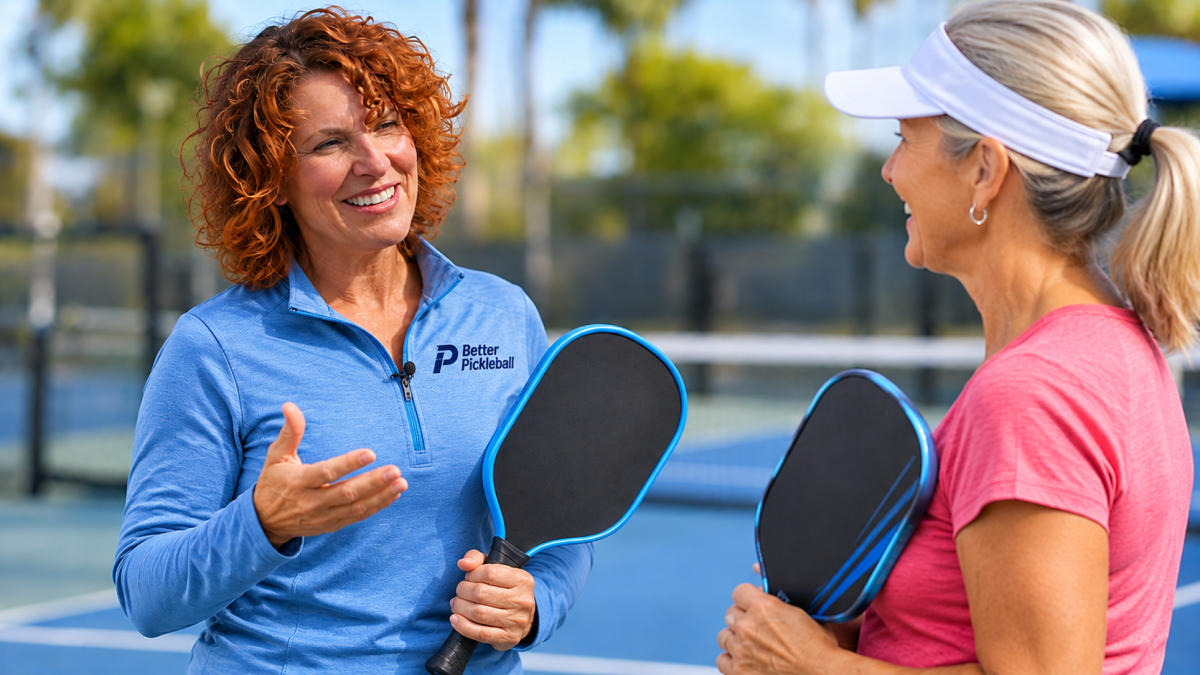
I see this happen all the time.
A player has been playing great. Her dinks are landing, her resets are holding up, and she’s finally feeling like a solid 3.5. Then she buys a shiny new pickleball paddle. Two weeks later, everything is sailing long, her drops are popping up, and she walks up to me after a session and says, “CJ, I think I forgot how to play.”
She didn’t forget anything. She changed the one piece of equipment that touches every single shot, and nobody showed her how to manage that change.
That’s what this post is for. If you’ve just bought a new pickleball paddle, or you’ve got one sitting in your online cart right now, I want to walk you through how to make the switch without losing your game.
You’re not the only one switching
If you’ve bought a new pickleball paddle lately, you’re in very good company.
Pickleball Union surveyed thousands of committed players over two years for its 2026 Paddle Consumer Report. A few numbers jumped out at me:
-
- 74% of players bought at least one paddle in 2025, and 1 in 5 bought one every six months or faster.
-
- 49% expect to buy their next paddle within six months, and 71% within a year.
-
- 9 in 10 own two or more paddles.
-
- They also followed the same 611 players over time. When those players changed paddles, 44% of the switches were to a different brand entirely.
So switching paddles isn’t some rare event. For most of us, it’s just part of playing this game. The question isn’t whether you’ll switch. It’s whether you’ll switch well.
Why a new pickleball paddle can make you feel worse at first
Here’s the thing. Your game is built on hundreds of small, automatic adjustments. How hard you squeeze. How long your swing is. How much you open the face on a drop. You dialed all of those in for your old paddle, without even thinking about it.
A new pickleball paddle can have a different weight, balance, power, spin, or sweet spot. Even a small change means your timing and touch are now a little off. That doesn’t mean it’s a bad paddle, and it doesn’t mean you’re playing bad pickleball. It’s just your body recalibrating.
The good news? Recalibrating is very coachable. Here’s how I’d walk you through it.
7 steps to switch pickleball paddles without losing your game
1. Know why you’re switching
Before you buy, finish this sentence: “I want a new paddle because…” More control at the kitchen? Less strain on your elbow? A little more pop on your drives? Your old one is just worn out?
If you can’t answer that, you might be chasing the shiny thing instead of solving a real problem. And I’ll be honest with you: if the real answer is “my third shot drop isn’t working,” a lesson will probably help you more than a new paddle will.
2. Demo a pickleball paddle before you commit
Borrow a friend’s paddle for a few games. Ask your coach if you can hit with a demo. And pay attention to how it feels on your soft shots, not just how it feels when you crush a drive. Most points are won and lost at the kitchen.
3. Don’t debut it in a tournament or league night
This is the big one. Give yourself a break-in period before your new paddle goes into anything that matters to you. Drill with it. Play casual rec games with it. Let your hands get used to it while the stakes are low.
4. Start with soft shots
Spend your first sessions on dinks, drops, and resets. These are the shots that need the most touch, and they’re the first ones a new paddle will throw off. If your new paddle has more power than your old one, you’ll find out fast when your dinks start floating.
Here’s a simple routine I like:
-
- 10 minutes of cross-court dinks
-
- 10 minutes of third shot drops
-
- 5 minutes of resets from mid-court
-
- Then go play
5. Adjust your swing, not your expectations
If balls are sailing long, shorten your backswing and loosen your grip a little. If the ball feels dead, let the paddle do a bit more work with a longer, smoother follow-through. Make one small change at a time and notice what happens.
This is exactly where an extra set of eyes helps. A coach can often spot in a few minutes what might take you weeks to figure out on your own.
6. Keep your old paddle in the bag
Most players own more than one paddle, so use that to your advantage. Keep your old paddle as a backup while you transition. If the new one just isn’t working on a given day, there’s no shame in switching back and trying again next session.
Just don’t bounce back and forth every game. Commit to the new paddle for a set number of sessions before you make a decision.
7. Give it real time before you judge it
Plan on a few weeks of regular play before you decide whether a paddle is right for you. Your first few sessions will tell you how a paddle feels. It takes longer to learn how you play with it.
One thing I recommend: jot down a quick note after each session. What felt good? What felt off? After a few weeks, you’ll have a clear picture instead of a gut reaction from one rough day.
Where coaching fits in
Here’s what I love about that survey data. If most committed players are buying a new paddle every year, then most of us are going through this adjustment over and over again. You don’t have to figure it out alone every time.
A paddle switch is actually a great time to check in with a coach. You’re already changing something, so it’s the perfect moment to clean up your backswing, firm up your reset, or build better habits into your new setup. Whether that’s a lesson, The Pickleball System, or one of our Better Pickleball camps, the goal is the same: make that new paddle feel like yours as quickly as possible.
And a big shout out to the folks at Pickleball Union. Data like this helps all of us, players and coaches, understand what’s really happening in the game. If you like digging into the numbers behind pickleball, their site is well worth a visit.
The bottom line
You’ll probably switch pickleball paddles in the next year. Most of us will. When you do:
-
- Know why you’re switching.
-
- Try before you commit.
-
- Break it in before it counts.
-
- Start with soft shots.
-
- Adjust your swing in small steps.
-
- Keep your old paddle as a backup.
-
- Give it a few weeks before you judge.
Do that, and your new paddle becomes an upgrade instead of a setback. I’ll see you on the court.
Pickleball paddle FAQ
How long does it take to get used to a new pickleball paddle?
Plan on a few weeks of regular play. Your first few sessions tell you how the paddle feels, but it takes longer to learn how you play with it. Keep notes after each session so you’re judging on a pattern, not one rough day.
Why am I hitting long with my new pickleball paddle?
Your new paddle probably has more power or a different sweet spot than your old one. Shorten your backswing, loosen your grip a little, and spend your first sessions on dinks, drops, and resets.
How often should you replace your pickleball paddle?
There’s no single answer, but most committed players switch often. In the Pickleball Union survey, 74% bought at least one paddle in 2025. Replace yours when it’s worn out or when you have a clear reason, like more control or less elbow strain, not just because something new came out.
Survey figures from the Pickleball Union 2026 Paddle Consumer Report, based on 3,617 responses from committed players across five survey waves (2024 to 2026).

CJ Johnson
Hey there — I’m a professional three-sport athlete and coach who has spent my entire adult life earning a living from playing and coaching sports. Since I started coaching more than three decades ago, one thing has remained the same: My commitment to see students not as they are but as what they can become and to move heaven and earth to help them realize their untapped potential. You should know that when it comes to helping pickleball players over 50 live their best lives on and off the courts, I'm an expert. Good pickleball is not just technique; it's the mind and body working holistically. That's why I'm also a personal trainer and weight management specialist. When I’m chillin', you'll find me watching Star Trek with my husband John and our two fur babies, Shirley and Ralph. (Yes, Happy Days)